Over the last year I have enjoyed birdwatching beginning in Oregon during a Summer Ornithology class and then continuing when I came to South America in October 2010. This might be a little boring if you are not interested in birds so be careful.
4/2-3 Serra do Cipó, Minas Gerais, Brazil. Andreza Starling drove us to Serra do Cipó for a short weekend, I have been here before but I had not had a strong interest in birds as I do now, I only remember seeing a Toucan on my previous trip. The first day we stopped at the slave trail and hiked up to the waterfall in the heat of the day, I only saw one Turkey Vulture Cathartes aura at a close distance where it flew only a few meters above me and then down where I got a good look at it from above, this is when I got confused because I saw a white band or collar at the base of its neck similar to the Andean Condors white collar. As I found out later this is a subspecies of the Turkey Vulture C. a. ruficollis found in eastern South America. I got a quick glimpse a black and white hummingbird the Black Jacobin Florisuga fusca which briefly visited a bright red flower on the trail. In the evening several large flocks of Yellow-chevroned Parakeets Brotogeris chiriri flew over making constant raucous outbursts above the posada in which I was staying.
The next day on our drive out of town the opposite direction of Belo Horizonte I spotted two Campo Flickers Colaptes campestris which have extremely vivid golden colored markings on their head and necks. I also saw several Crested Black-tyrants Knipolegus lophotes, I viewed one at a close distance of only a few meters where I could see its glossy blueish tones in its otherwise black color except for its white patches on its wings shown only in flight. We saw a pair of Toco Toucans Rhamphastos toco near the end of the drive in the edge of town. We stopped at a bridge on the way back and looked over the river which was a red-brown color about 100 meters wide. Along the bank there was four Black-crowned Night-herons Nycticorax nycticorax spread out all about 50 meters from the next along the only visible riverbank. In the trees next to the river there was about 20 or 30 Red-rumped Caciques Cacicus haemorrhous. While I was standing there looking over the river a beautiful all-black bird with two tail feathers as long as the rest of its body and a white crown perched on a wire going over the river where I got a great look at the Long-tailed Tyrant Colonia colonus. Flying over the river were many amazingly agile White-winged Swallows Tachycineta albaventer.
3/24 Parque Municipal das Mangabeiras, Belo Horizonte. I got dropped off at the edge of the parque around mid morning. The first bird I found from its incessant chirp was a White-vented Violetear Colibri serrirostris. Inside the park walking around the road I noticed a large bird in the trees I stopped to try and see what it was, just as I sat down and pulled out my bird guide it flew down from the trees right in front of me as if to help me identify it. It turned out to be a Dusky-legged Guan Penelope obscura which just as I positively identified it, it flew back into the trees out of sight. Moving on down the paver stone path there was the Rofous-collared Sparrow Zonotrichia capensis on the ground, the Southern House Wren Troglodytes musculus in the shrubs and Blue-and-white Swallows Pygochelidon cyanoleuca constantly circling above. I identified the Black-capped Antwren Herpsilochmus atricapillus fluttering about in the bushes near the path. There was also several pairs of the brightly colored, blue and black males and green female, Blue Dacnis Dacnis cayana chasing each other and making lots of noise in the tree canopy. After hearing a tapping sound from the forest I stopped and looked for its source after 15 or 20 minutes I finally saw the cutest tiny dwarf woodpecker only 10 cm long a White-barred Piculet Picumnus cirratus. At this spot on the path was a mixed flock of songbirds high in the canopy of about 15 meters the only species identified was the White-rimmed Warbler Basileuterus leucoblepharus. At the viewpoint on a large deck overlooking Belo Horizonte I noticed two Black Vultures Coragyps atratus resting on a small branch in the shade of the midday sun while several others soared high overhead. A family of five Black-tufted Marmosets Callithrix penicillata with two adults and three small young curiously watched me from the forest edge down near the creek at about 2-3 meters distance. At the small pond in the parque their was the common black and white Masked Water-tyrants Fluvicola nengeta. Walking back home I saw a brilliant Saffron Finch Sicalis flaveola in one of the many trees which line the streets of Belo Horizonte.
3/20 Inhotim, 60 kilometers from Belo Horizonte. It was an incredible drive over this large hill, some would call it a mountain depending on where you grew up, down the back side was a twisty curvy extremely steep road surrounded by jungle that went way down into this valley. There were Black Vultures roosting in trees that enclosed the road. When we got to Inhotim there was several large ponds and I noticed a statue like egret that I was not sure if it was real or not, I later found out it was a real and quite patient Great Egret Ardea alba. The ponds were home to several species of ducks and geese including Black-bellied Whistling Duck Dendrocygna autumnalis, Fulvous Whistling-duck Dendrocygna bicolor, Rosy-billed Pochards Netta peposaca, White-cheeked Pintails Anas bahamensis, Orinoco Goose Neochen jubata, Black Swan Cygnus atratus and the Coscoroba Swan Coscoroba coscoroba. I also spotted an Amazon Kingfisher Chloroceryle amazona, a Black-crowned Night-heron Nycticorax nycticorax and a Striated Heron Butorides striata.
Tweety birds be Chesnut-capped Blackbird Chrysomus ruficapillus, Masked Water-tyrant Fluvicola nengeta.
3/16 As I waited for Deza at school I watched the too familiar House Sparrows hop about gathering scraps of food from the outside dinning area. I also saw a new bird to me and later identified it as a Cattle Tyrant, which was very hard to identify since there are so many similar looking Tryants, Flycatchers and Kingbirds. In the sky all around the city of Belo Horizonte you can see Blue-and-White Swallows in abundance gracefully collecting flying insects. If you look higher up into the clouds there is often Black Vultures soaring in circles.
3/13 Punta Del Este, Argentina. I walked around the southern most point of Uruguay today with Benjamin Ryken. We saw some cool birds including Geater and Lesser Yellowlegs, several Snowy Egrets, Olivaceous Cormorants, American Oystercatchers, a Ovendird, Saffron Finch, House Sparrow, Southern Lapwing and the smallest Kingfisher I have seen plus several unknown birds since I had niether binoculars or a bird book but I saw at least two more small shore birds a gull, a tern, a hummingbird and a falcon.
3/7 Alicia Dominguez and I went down to the Ecological Reserve in Buenos Aires today. We walked around looking at birds trying to enjoy this beautiful day without stressing about our final projects that are due tomorrow that we have been working on for six months. We saw some really pretty birds I have never seen before including a Grey-necked Wood-rail with a young puffball juvenile, a pair of Yellow-billed Cardinals my favorite spotting this day, a very songful Double-collared Seedeater and a little Chequered Woodpecker which are only 14cm long.
3/5 Ben Garrison and I took the subte downtown Buenos Aires and walked along the Ecological reserve looking for birds. Since last visiting this site four months prior the weather has heated up to around 30 celsius during the heat of the day. There was also a large fire in the marshy area which is now devoid of the water which filled it before. New species we noticed in the area were flocks of Baywings, two fire engine red crested cardinals and a Peregrine Falcon.
4/2-3 Serra do Cipó, Minas Gerais, Brazil. Andreza Starling drove us to Serra do Cipó for a short weekend, I have been here before but I had not had a strong interest in birds as I do now, I only remember seeing a Toucan on my previous trip. The first day we stopped at the slave trail and hiked up to the waterfall in the heat of the day, I only saw one Turkey Vulture Cathartes aura at a close distance where it flew only a few meters above me and then down where I got a good look at it from above, this is when I got confused because I saw a white band or collar at the base of its neck similar to the Andean Condors white collar. As I found out later this is a subspecies of the Turkey Vulture C. a. ruficollis found in eastern South America. I got a quick glimpse a black and white hummingbird the Black Jacobin Florisuga fusca which briefly visited a bright red flower on the trail. In the evening several large flocks of Yellow-chevroned Parakeets Brotogeris chiriri flew over making constant raucous outbursts above the posada in which I was staying.
The next day on our drive out of town the opposite direction of Belo Horizonte I spotted two Campo Flickers Colaptes campestris which have extremely vivid golden colored markings on their head and necks. I also saw several Crested Black-tyrants Knipolegus lophotes, I viewed one at a close distance of only a few meters where I could see its glossy blueish tones in its otherwise black color except for its white patches on its wings shown only in flight. We saw a pair of Toco Toucans Rhamphastos toco near the end of the drive in the edge of town. We stopped at a bridge on the way back and looked over the river which was a red-brown color about 100 meters wide. Along the bank there was four Black-crowned Night-herons Nycticorax nycticorax spread out all about 50 meters from the next along the only visible riverbank. In the trees next to the river there was about 20 or 30 Red-rumped Caciques Cacicus haemorrhous. While I was standing there looking over the river a beautiful all-black bird with two tail feathers as long as the rest of its body and a white crown perched on a wire going over the river where I got a great look at the Long-tailed Tyrant Colonia colonus. Flying over the river were many amazingly agile White-winged Swallows Tachycineta albaventer.
3/24 Parque Municipal das Mangabeiras, Belo Horizonte. I got dropped off at the edge of the parque around mid morning. The first bird I found from its incessant chirp was a White-vented Violetear Colibri serrirostris. Inside the park walking around the road I noticed a large bird in the trees I stopped to try and see what it was, just as I sat down and pulled out my bird guide it flew down from the trees right in front of me as if to help me identify it. It turned out to be a Dusky-legged Guan Penelope obscura which just as I positively identified it, it flew back into the trees out of sight. Moving on down the paver stone path there was the Rofous-collared Sparrow Zonotrichia capensis on the ground, the Southern House Wren Troglodytes musculus in the shrubs and Blue-and-white Swallows Pygochelidon cyanoleuca constantly circling above. I identified the Black-capped Antwren Herpsilochmus atricapillus fluttering about in the bushes near the path. There was also several pairs of the brightly colored, blue and black males and green female, Blue Dacnis Dacnis cayana chasing each other and making lots of noise in the tree canopy. After hearing a tapping sound from the forest I stopped and looked for its source after 15 or 20 minutes I finally saw the cutest tiny dwarf woodpecker only 10 cm long a White-barred Piculet Picumnus cirratus. At this spot on the path was a mixed flock of songbirds high in the canopy of about 15 meters the only species identified was the White-rimmed Warbler Basileuterus leucoblepharus. At the viewpoint on a large deck overlooking Belo Horizonte I noticed two Black Vultures Coragyps atratus resting on a small branch in the shade of the midday sun while several others soared high overhead. A family of five Black-tufted Marmosets Callithrix penicillata with two adults and three small young curiously watched me from the forest edge down near the creek at about 2-3 meters distance. At the small pond in the parque their was the common black and white Masked Water-tyrants Fluvicola nengeta. Walking back home I saw a brilliant Saffron Finch Sicalis flaveola in one of the many trees which line the streets of Belo Horizonte.
3/20 Inhotim, 60 kilometers from Belo Horizonte. It was an incredible drive over this large hill, some would call it a mountain depending on where you grew up, down the back side was a twisty curvy extremely steep road surrounded by jungle that went way down into this valley. There were Black Vultures roosting in trees that enclosed the road. When we got to Inhotim there was several large ponds and I noticed a statue like egret that I was not sure if it was real or not, I later found out it was a real and quite patient Great Egret Ardea alba. The ponds were home to several species of ducks and geese including Black-bellied Whistling Duck Dendrocygna autumnalis, Fulvous Whistling-duck Dendrocygna bicolor, Rosy-billed Pochards Netta peposaca, White-cheeked Pintails Anas bahamensis, Orinoco Goose Neochen jubata, Black Swan Cygnus atratus and the Coscoroba Swan Coscoroba coscoroba. I also spotted an Amazon Kingfisher Chloroceryle amazona, a Black-crowned Night-heron Nycticorax nycticorax and a Striated Heron Butorides striata.
Tweety birds be Chesnut-capped Blackbird Chrysomus ruficapillus, Masked Water-tyrant Fluvicola nengeta.
3/16 As I waited for Deza at school I watched the too familiar House Sparrows hop about gathering scraps of food from the outside dinning area. I also saw a new bird to me and later identified it as a Cattle Tyrant, which was very hard to identify since there are so many similar looking Tryants, Flycatchers and Kingbirds. In the sky all around the city of Belo Horizonte you can see Blue-and-White Swallows in abundance gracefully collecting flying insects. If you look higher up into the clouds there is often Black Vultures soaring in circles.
3/13 Punta Del Este, Argentina. I walked around the southern most point of Uruguay today with Benjamin Ryken. We saw some cool birds including Geater and Lesser Yellowlegs, several Snowy Egrets, Olivaceous Cormorants, American Oystercatchers, a Ovendird, Saffron Finch, House Sparrow, Southern Lapwing and the smallest Kingfisher I have seen plus several unknown birds since I had niether binoculars or a bird book but I saw at least two more small shore birds a gull, a tern, a hummingbird and a falcon.
3/7 Alicia Dominguez and I went down to the Ecological Reserve in Buenos Aires today. We walked around looking at birds trying to enjoy this beautiful day without stressing about our final projects that are due tomorrow that we have been working on for six months. We saw some really pretty birds I have never seen before including a Grey-necked Wood-rail with a young puffball juvenile, a pair of Yellow-billed Cardinals my favorite spotting this day, a very songful Double-collared Seedeater and a little Chequered Woodpecker which are only 14cm long.
3/5 Ben Garrison and I took the subte downtown Buenos Aires and walked along the Ecological reserve looking for birds. Since last visiting this site four months prior the weather has heated up to around 30 celsius during the heat of the day. There was also a large fire in the marshy area which is now devoid of the water which filled it before. New species we noticed in the area were flocks of Baywings, two fire engine red crested cardinals and a Peregrine Falcon.
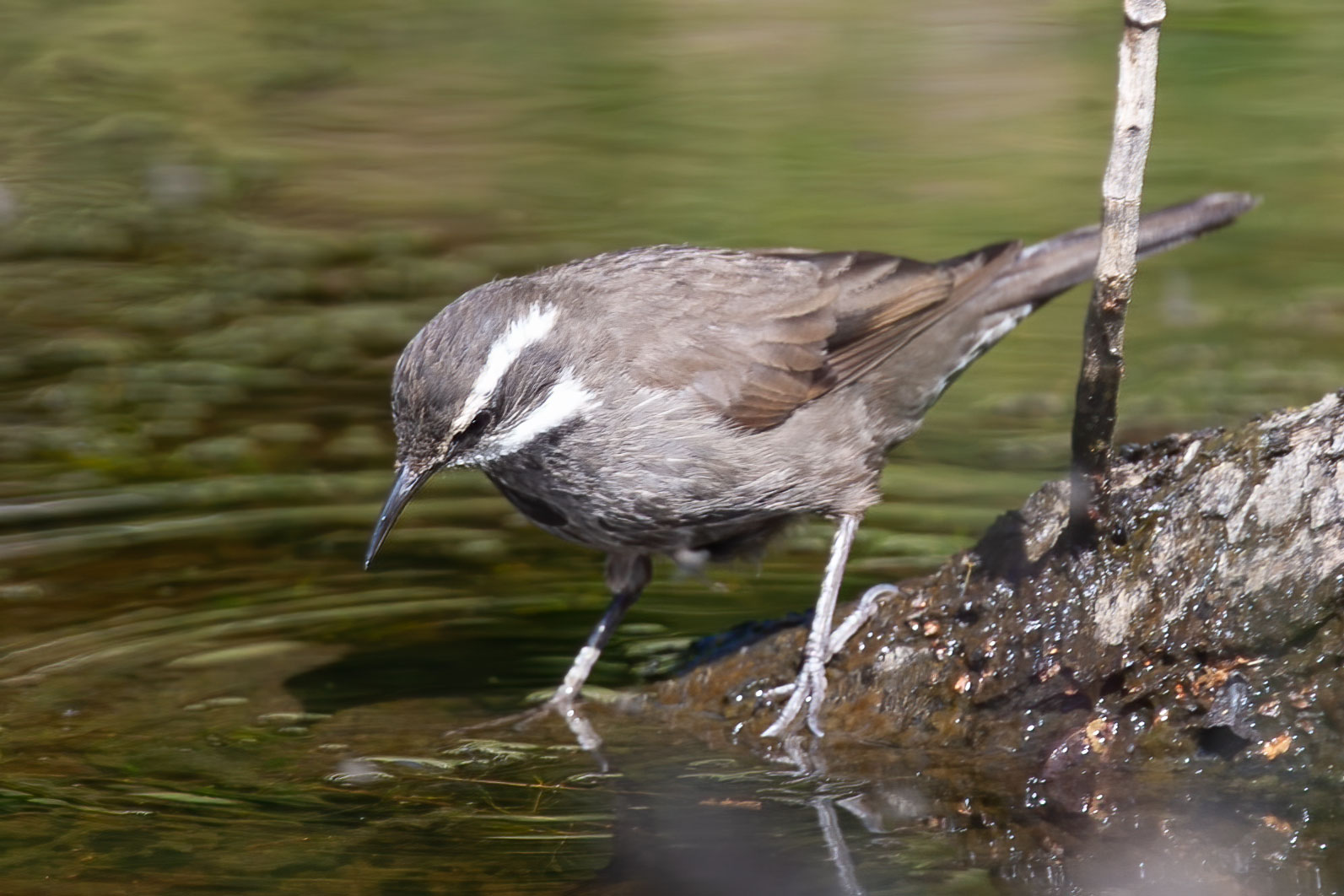
 2/26 Ushuaia, Argentina: I went for a walk along the water this afternoon and I saw some Dolphin Gulls, one Dark-bellied Cinclode, Imperial Shags diving for fish and lots of House Sparrow hopping around.
Since I do not own a camera. The pictures are from this very useful website for birds.
http://arthurgrosset.com/
